Sovereign Waters
The Last Luxury Is No Longer What You Own. It's What You Refuse.

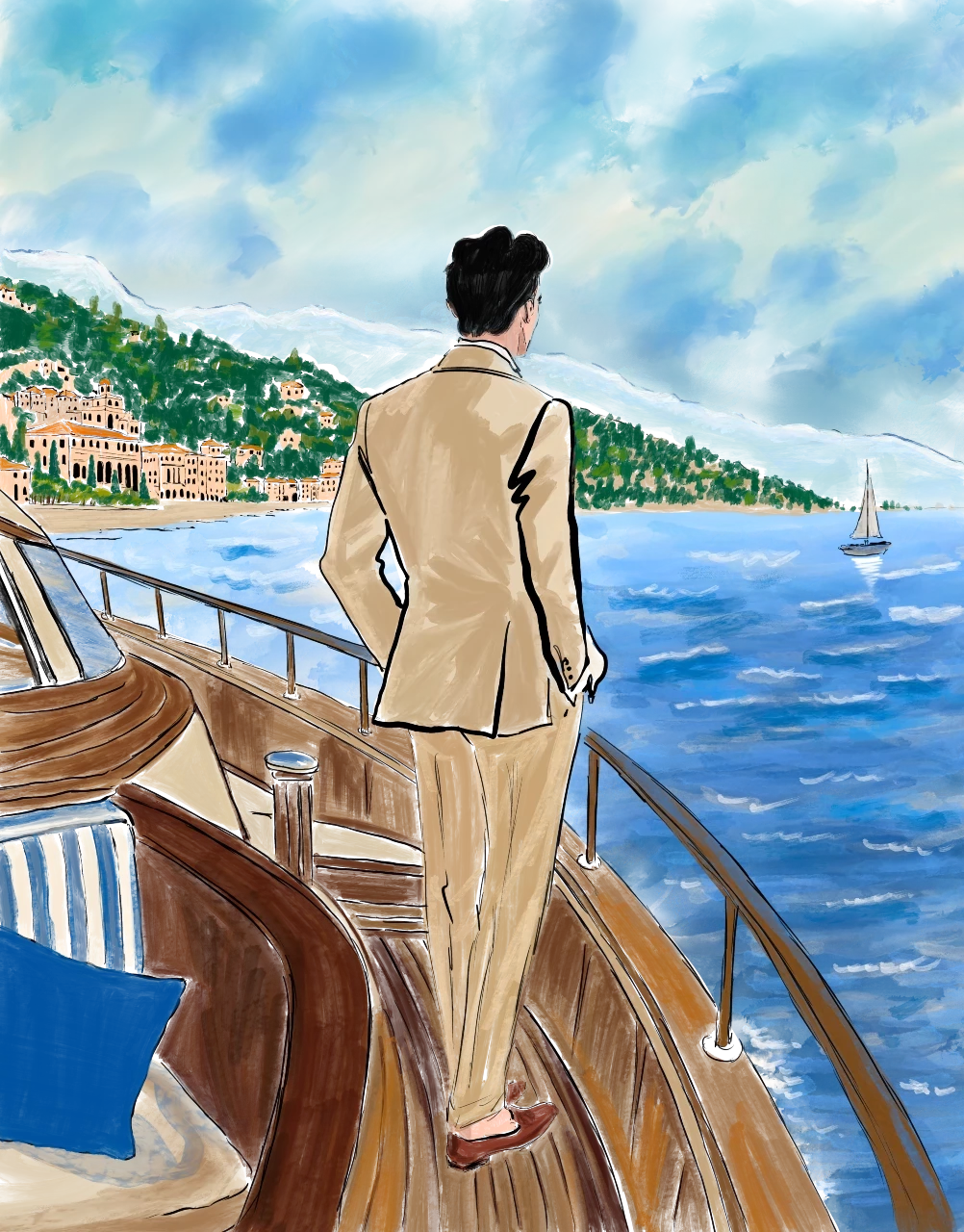
THERE IS A MOMENT, somewhere off the granite shoulders of the Costa Smeralda, when a watch stops mattering. Not because time has stopped, but because, for the first time in longer than you can remember, no one is measuring it against you.
This is the secret the yachting world has always known and rarely said aloud: the object was never the point. The teak, the tonnage, the top speed—this is the vocabulary, not the sentence. What the very rich are actually buying, when they commission a 120-metre hull from a shipyard that will not return your call unless you already know its number, is something no invoice can itemise. They are buying the right to change their mind.
Breakfast becomes lunch in a cove nobody can pronounce. An afternoon set aside for waterskiing dissolves, unmourned, into three hours spent pleasantly arguing about a monastery no cruise itinerary has ever mentioned. The captain adjusts. The world, for once, adjusts to you.
Call it sovereignty. It is the only currency that has never been successfully counterfeited.
The Mediterranean remains, as it has for three thousand years, the world's most persuasive argument for wandering without a plan. Saint-Tropez still performs its old theatre of see-and-be-seen; the Greek islands still turn white and blue like a held breath; and somewhere between them lie the coves that appear on no postcard, known only to captains who have earned the right to keep a secret.
But the yacht itself has quietly become the more interesting destination. Step aboard and you step into a completed thought—an owner's philosophy, rendered in oak, linen, light. Nothing here is chosen to impress a guest who will never come back. It is chosen the way a home is chosen: for the particular, private pleasure of the people who actually live in it. A canvas by a favourite painter hangs a few feet from a photograph no stranger would recognise. This is not a showroom. It is somebody's actual life, simply afloat.
Onboard, the rhythms rearrange themselves without asking permission. Mornings arrive as a swim, taken before the coastline has bothered to wake up. Traffic becomes a paddleboard. Meals are dictated by appetite rather than by any clock on any wall, and the sea supplies a dining room no reservation could ever secure. Even the notion of wellness expands beyond the spa menu and into the air itself—the particular, restorative silence of open water, which asks nothing of you and returns everything.
And yes, the world remains reachable. Satellite links keep the office, the family, the noise, one tap away, should you want them. But the actual luxury was never connectivity. It was the standing option to switch it off—to let your attention belong, briefly and entirely, to yourself.
This is why yachting has quietly stopped being a holiday and started being something closer to a philosophy: privacy, mobility, and meaning, folded into a single, floating argument for a better-organised life.
Behind the postcard, the business of yachting has been rewriting its own rules. The relationship between shipyard, owner and management company no longer ends at delivery; increasingly, it begins there. A vessel is now conceived around a life already being lived, not built to a brochure and hoped into one. Technical management, charter oversight, operational support—the entire apparatus exists now to accompany an owner through the full arc of ownership, not merely to hand over the keys and wave from the dock.
For those approaching yachting for the first time, charter remains the most elegant introduction—a chance to rehearse the fantasy before committing to it. For owners already initiated, a well-managed charter programme performs a quieter magic: it keeps a great yacht working, living, earning its keep, rather than gathering dust in a marina like a sculpture no one visits.
None of this exists apart from the sea that makes it possible, and the industry has begun to reckon, seriously, with what it owes in return. Hybrid propulsion, sustainable fuels, composite materials engineered for a lighter footprint, circular manufacturing, onboard systems intelligent enough to sip rather than gulp—these are no longer marketing footnotes. They are the new measure of ambition. Innovation, in this world, is no longer a question of how fast a vessel can go. It is a question of how wisely.
In the end, no owner, however candid, describes their yacht by its specifications when asked what it has given them. They describe a cove. A dinner where the stars were, improbably, still visible. A child finding something extraordinary in three feet of water. A morning with no agenda beyond the sound the sea happened to be making.
The yacht was never the wealth. It was only ever the vessel for it.
What it delivers, in the end, is almost embarrassingly simple, which may be why so few have said it plainly: the freedom to choose your own horizon, your own rhythm, your own sovereignty—and to change your mind about all three before lunch.
The views and opinions expressed herein are the views and opinions of the author and do not necessarily reflect those of The Monegasque™.
Disclosure: The Monegasque™ enhances the editing process with the help of carefully selected AI tools. These tools provide valuable support without taking over the editing process completely, ensuring that the final product is the result of human creativity and expertise augmented by the benefits of enhanced technology. This article is protected under the copyright of The Monegasque™. Unauthorized reprinting, republishing, or rewriting of this content is strictly prohibited without explicit permission from The Monegasque™. Quotations from this material are permissible provided that a direct link to the full article on The Monegasque™ is included.