Nature As Currency
The Art Market's Next Great Transfer.
WE STAND AT A QUIET but decisive inflection point in the art market. The old certainties—trophy hunting at auction, the relentless chase of the next blue-chip name, the treatment of paintings as interchangeable financial instruments—are yielding to something more enduring.
What is emerging is not merely a shift in taste, but a revaluation of what art itself represents. Nature, once background or decorative motif, is becoming the central currency of culture. And with the largest intergenerational wealth transfer in history underway, the collectors who will shape the next decades are already rewriting the rules of acquisition, stewardship, and display.
David Nahmad, one of the most formidable guardians of modern art and a presence whose collection has long shaped the market from Monaco, has long insisted on a distinction that feels newly urgent: "Art is not an asset, but a culturally significant part of humanity."
Elsewhere he is even more direct: "Art is priceless! It's like Victor Hugo or Mozart. This is part of our culture." In a hundred or a thousand years we will still speak of Monet, Cézanne, Van Gogh, and certainly Picasso. For Nahmad, a work must be historical to hold lasting value; it is a document, an intellectual and spiritual testimony rather than a speculative vehicle. "There is very little art, compared to the amount of people who want to buy it."
That scarcity, once the foundation of market power, is now colliding with a different scarcity: the scarcity of meaning, of connection to the living world, of works that speak beyond the balance sheet.
I see this collision every day in my advisory practice. Seasoned collectors who once measured success by the number of Picassos or Rothkos on their walls are now asking different questions.
Younger inheritors—those receiving the great transfer of wealth are less interested in pure status objects and more drawn to works that engage ecological consciousness, material truth, and a sense of place. They want art that feels alive rather than merely expensive. Charles Saatchi once observed that "What matters and survives is the art. I buy art that I like. I buy it to show it off in exhibitions." That impulse remains, yet the exhibitions themselves are changing.
Collectors no longer wish to hide masterpieces in climate-controlled storage or private viewing rooms alone; they want them to breathe, to converse with landscape, light, and time.
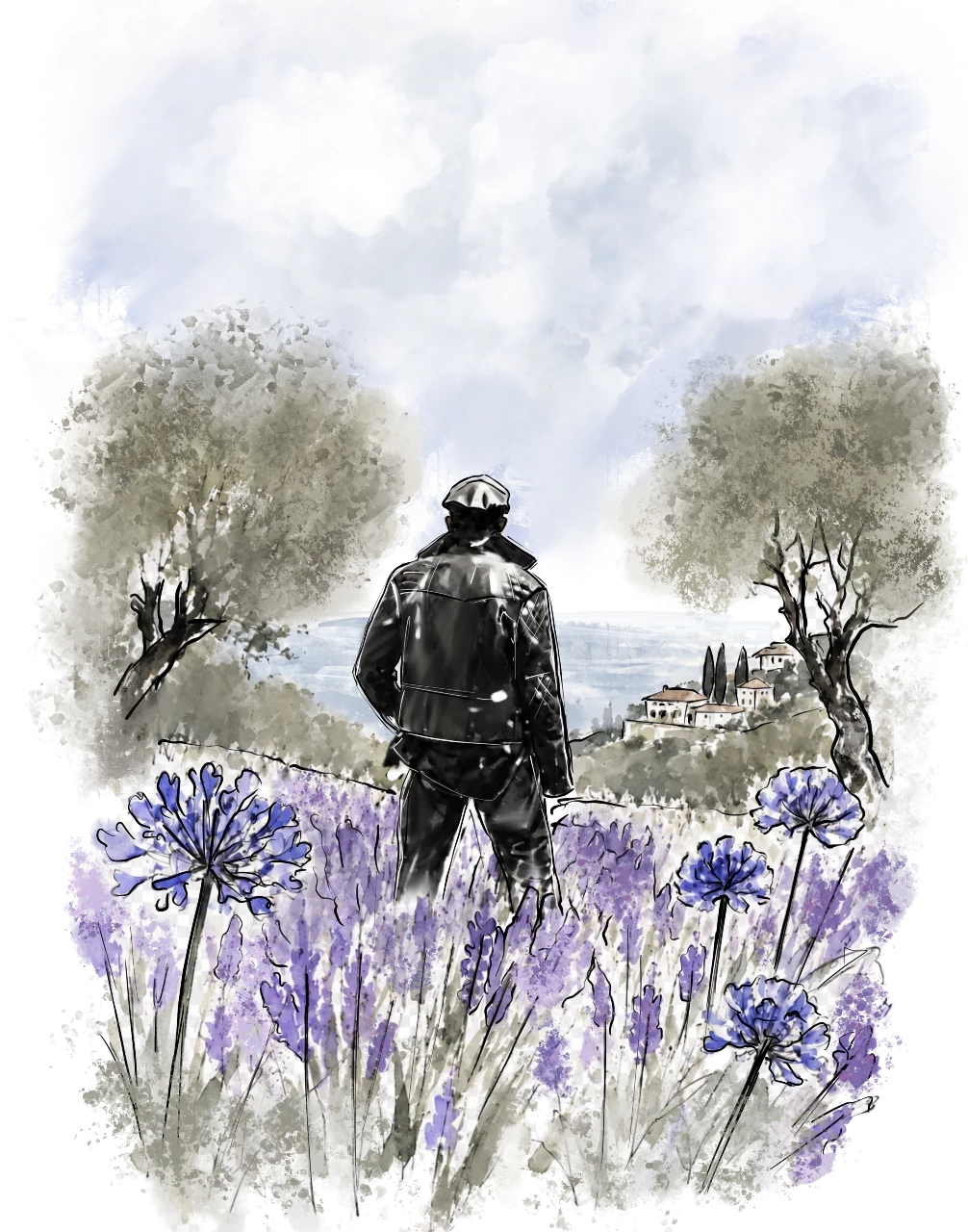
This is where the work of Peter Marino at Villa La Pause becomes quietly prophetic. The architect, who has shaped Chanel's architectural presence for decades, restored the gardens of Coco Chanel's former Riviera home in Roquebrune-Cap-Martin with a rare sensitivity to the site's original spirit. He did not impose a rigid formal garden. Instead, he allowed lavender to cascade in coulées down the slopes, left lawns to grow wild with clover, repositioned ancient olive trees some centuries old—with respect rather than dominance, and sought a textured, almost tweed-like quality that echoed Chanel's own materials while remaining faithful to Mediterranean nature.
The result is not decoration. It is a living dialogue between architecture, history, and the land. La Pause reminds us that the most sophisticated cultural statements of the future may not be white-cube installations, but places where art and nature are inseparable.
Collectors are beginning to understand this. Nature is no longer a theme to be illustrated; it is becoming the measure of cultural legitimacy. Artists who work with organic materials, who address climate and biodiversity, who restore landscapes as part of their practice, or who simply return us to the sensory intelligence of the natural world are commanding deeper, more considered attention. The market is still learning how to price this. Speculation remains, of course—David Nahmad has long warned against the "stupid art market" inflated by publicity and thin demand, but the most sophisticated buyers are looking past the noise. They are asking what will still matter when the current cycle ends. Knowledge, as Rosa de la Cruz has put it, is power.
Without understanding, there can be no genuine love of the work. Generational wealth transfer accelerates this shift. Families that once passed down portfolios of Impressionist and modern masters are now considering how those works will be contextualized for heirs who grew up with environmental urgency as a given. The question now is not "What is it worth?" but "What does it contribute?"
Nasser Khalili has spoken of ownership as a myth; we are temporary custodians. That custodianship is expanding beyond the object to include the conditions that make culture possible—clean air, living soil, intact coastlines, the quiet of an olive grove at dusk.
What, then, of exhibitions themselves? The white cube is not dead, but it is no longer sufficient. The future of presentation will be hybrid, site-responsive, and often outdoor or semi-outdoor. Imagine works that change with the seasons, that require the viewer to walk through gardens or along cliff paths, that are experienced in the same Mediterranean light that once illuminated Chanel's terrace. A future Monaco Biennale could take precisely this form. Not another transient fairground of shipping crates and temporary walls, but a living event woven into the Principality's geography and heritage: installations in restored gardens, dialogues between historical collections and contemporary ecological practice, performance and sound works that respond to sea and wind, ephemeral architectures that leave no scar. It could be a biennale that treats the landscape itself as co-author, that invites collectors and the public to experience art as part of a larger continuum of care rather than as discrete commodities.
In such a setting, Nahmad's philosophy finds its natural extension. To sell a work, he has said, is first and foremost to protect it. The highest form of protection may soon be to place it where nature and culture reinforce one another, where the intellectual and spiritual dimensions he values can be felt rather than merely catalogued. The market will continue to price rarity and historical importance. But the collectors who will define the next era are those who understand that the rarest currency of all is a living relationship with the world that produced the art in the first place.
We are not abandoning beauty, history, or even market intelligence. We are expanding their frame. Nature is not a trend. It is the ground from which culture has always grown. In the years ahead, the most compelling collections and the most memorable exhibitions will be those that remember this, and act accordingly.
The views and opinions expressed herein are the views and opinions of the author and do not necessarily reflect those of The Monegasque™.
Disclosure: The Monegasque™ enhances the editing process with the help of carefully selected AI tools. These tools provide valuable support without taking over the editing process completely, ensuring that the final product is the result of human creativity and expertise augmented by the benefits of enhanced technology. This article is protected under the copyright of The Monegasque™. Unauthorized reprinting, republishing, or rewriting of this content is strictly prohibited without explicit permission from The Monegasque™. Quotations from this material are permissible provided that a direct link to the full article on The Monegasque™ is included.