From Flashy To Full Proof
Why Monaco Is The Last Place Wealth Feels Safe.
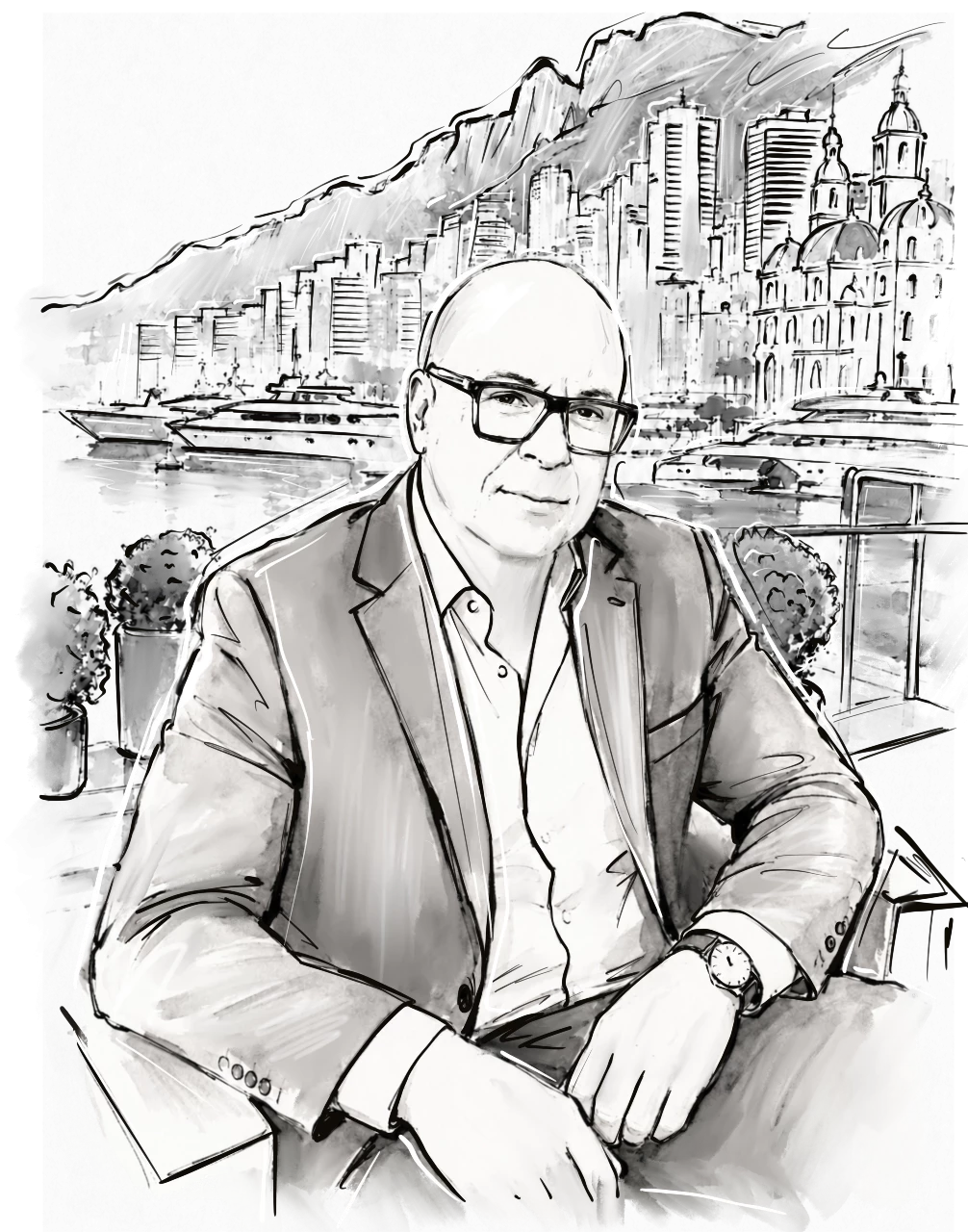
FOR MOST of the last century, being wealthy meant accumulating things that photographed well: real estate, art, aircraft, yachts. Monaco has plenty of all of it, and none of that is going away. But talk to the people who actually manage these fortunes—not the ones who spend them—and a quieter shift becomes obvious. The trophies used to be the point. Now they're almost incidental. What the serious money is buying, more and more, is the capacity to survive anything—a market collapse, a health crisis, a geopolitical shock, or an heir who wasn't ready. Call it the new luxury. Not acquisition. Endurance.
Monaco has understood this before almost anywhere else, largely because it never had the luxury of separating the two conversations. In a territory this small, the people who manage capital and the people who live inside it are often the same people, at the same dinner tables, subject to the same doctors, the same security consultants, the same discretion. Private banks, family offices, longevity clinics, and quietly excellent hospitals sit within walking distance of one another—an ecosystem built, deliberately, around the idea that a fortune and the person who holds it should be able to age well together.
That's the part outsiders miss. They see the marina and assume the story is about display. The real story is about time; it's treated closer to a financial variable—because it is one. A family whose patriarch might reasonably live to 100 is not managing the same portfolio, on the same horizon, with the same succession timeline, as one built for a 75-year lifespan. Preventive medicine, sleep science, metabolic monitoring, stress physiology—the entire vocabulary of the wellness clinics scattered across the Rock and Fontvieille—has quietly become part of the actuarial conversation happening one floor up in the private bank. Preserving the person and preserving the portfolio have stopped being two different jobs.
Privacy plays the same double role. It reads, from the outside, as a lifestyle preference—tinted windows, NDAs, a certain reluctance to be photographed. Inside the machinery of wealth, it functions more like insulation: the quiet that lets decisions get made calmly, away from the noise that destroys as many fortunes as bad investments do. Security, mobility, air quality, the freedom to simply choose how a day unfolds—these used to be lifestyle footnotes. In Monaco they read more like line items. Strategic assets, not indulgences.
None of this means the old machinery of finance has become irrelevant—it hasn't. Wealth still needs institutions capable of absorbing shocks too large for any one family or company to bear alone. That is simply the plumbing beneath the house, unglamorous and essential in the way plumbing always is. But plumbing was never the point of the house. What Monaco has built, almost by accident of geography and a century of careful positioning, is something closer to a philosophy: that a fortune's real measure isn't the size of the balance sheet, but the strength of everything surrounding it—the institutions, the relationships, the discretion, the health of the people who hold it—that determines whether it survives contact with the next generation.
Wealth in this century rests on four kinds of capital, and only one of them is financial. There is human capital—the health and judgment of the people carrying the fortune forward. Institutional capital—the banks, offices, and structures built to outlast any one individual. And beneath both, trust capital: the accumulated confidence, built over years and impossible to shortcut, that lets a family hand a fortune to people it has never met and believe it will still be there in fifty years. A balance sheet can tell you what a family owns. It cannot tell you whether any of that will still exist in two generations. That's a separate ledger—and it's the one that actually decides the outcome.
Which may be why Monaco, of all places, has become an unlikely case study for where global wealth is heading. Not because of what's parked in its harbor, but because it stumbled—deliberately or otherwise—onto the idea that money and wellbeing were never really separate assets, viewed from two angles, and the families who understand that tend to be the ones still standing three generations later.
The views and opinions expressed herein are the views and opinions of the author and do not necessarily reflect those of The Monegasque™.
Disclosure: The Monegasque™ enhances the editing process with the help of carefully selected AI tools. These tools provide valuable support without taking over the editing process completely, ensuring that the final product is the result of human creativity and expertise augmented by the benefits of enhanced technology. This article is protected under the copyright of The Monegasque™. Unauthorized reprinting, republishing, or rewriting of this content is strictly prohibited without explicit permission from The Monegasque™. Quotations from this material are permissible provided that a direct link to the full article on The Monegasque™ is included.